WHY DO PROJECTS FAIL – The real reasons Blog 3

WHY DO PROJECTS FAIL – The real reasons Blog 3

Your content goes here. Edit or remove this text inline or in the module Content settings. You can also style every aspect of this content in the module Design settings and even apply custom CSS to this text in the module Advanced settings.

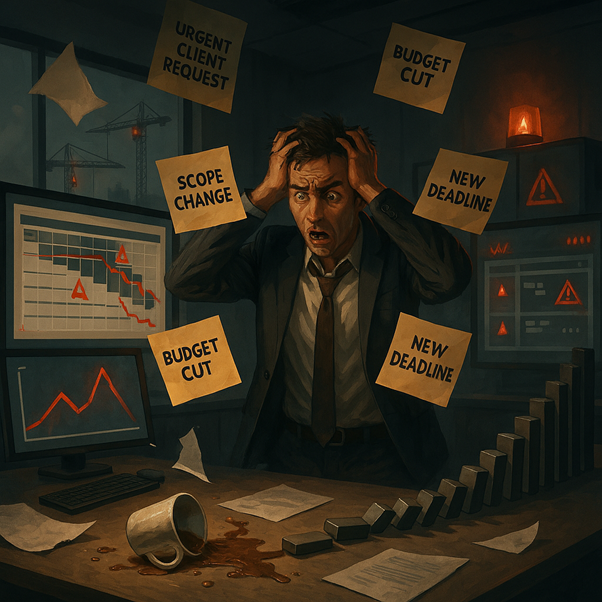
Switching priorities, 

Priorities, Priorities… This reason for project failure is a wide as you can get. A great many reasons that could actually be listed as reasons in their own right for project failure, can be categorised under switching priorities.

Some of the reasons why Switching Priorities do cause project failure may include:

  1. Scope creep: Fortunately, but only if your contract was properly drafted, scope creep is usually at the risk and cost of the employer and you as the contractor would be entitled to a compensation event, variation order or similar and any resulting switched priorities should have little or no effect on the project outcome.
  2. Insufficient planning: If the contractor’s programme is inaccurate, incomplete or reflect dates which are wrong you can expect that switching priorities (in as far as project execution is concerned – budget, cost overruns, missed deadlines, payment of penalties etcetera) will occur on a regular and increasing basis. This will most likely cause project failure.
  3. Rework: Any rework will affect the accepted programme, recourses, project budget, the project manager’s time, and attention, to name a few. Depending on the size and nature of the rework (plus where it lies in the programmes – perhaps on the critical path) rework will influence the project and most likely result in switched priorities.
  4. Other projects: Sometimes it happens that a project manager is tasked with more than one project or is tasked with a new project midway through his/her current project. This may, depending on the size of one or both the project result in switched priorities.
  5. Multiple priorities: All projects have multiple challenges that are or may become priorities. Where a project manager is faced with multiple priorities, it is of paramount importance that he/she identifies and rate the priorities in the order from most important to least important. This must be done in writing and stuck to your office wall. If this is not done you will lose track of some of the priorities and those will haunt you and the project until closeout.

This “reason for project failure” is, as stated, extremely wide and we can prepare pages and pages of examples, some of which may even be more relevant than the ones identified herein above. That is not the purpose of this blog. The purpose is to think about these challenges when you plan for your next big project.

What examples of switching priorities do you have that you would like to share. Please share with us all so that we can all learn from it. We find the feedback interesting and we appreciate the time you take in commenting. You can contact us at Info@vinculaholding.com or vists our website at https://vinculaholdings.com/

Enjoy the Friday and weekend.
The real reasons projects fail – 2

The real reasons projects fail – 2

Reasons Projects fail – The real reasons. Blog 2

Good morning, everybody. Hope you are having a wonderful day so far. Right at the outset let me state this clearly, these blogs are not criticisms, or similar types of remarks by somebody sitting in the gallery throwing the proverbial stones at you, the project manager, fighting in the arena every single day. Being a project manager must be one of the most taxing and stressful occupations in today’s financial and incredibly competitive market, where fewer and fewer projects are available. Hats off to you all!

These blogs relate to expensive lessons learnt and observations made in general. Perhaps you will find this interesting.

We compared the 2024 reasons for project failure with those listed early in 2026 to determine if the reasons for project failure changed at all. If you have a look at Vincula’s blog 1, you will note it did.

We  grouped the lowest ranking reasons, stated for both periods, together and two of the lowest ranking reasons I shall touch on are Unrealistic/unaligned stakeholder expectations, and secondly, inadequate risk management and lack of monitoring and controlling the project

Unrealistic stakeholder, management

If you are unsure what you are going to receive, or you are not sure of what you have to deliver, everybody is in for a difficult day. Worse, you are absolutely sure what you are going to receive / have to deliver – and your understanding is wrong.

Different stakeholders have different expectations, and you have to manage the expectations from day one. Your employer’s expectations are different to those of your client or the EPCm etcetera. Not all parties involved in a project are stakeholders, but all parties involved have expectations from you, and the project. All stakeholders, especially the client, must have a clear understanding of the what the outcome and deliverables of the project will be.

Make sure the scope is absolutely clear and understood. State your understanding of the deliverable / expectation so that there can be no doubt as to what will be delivered / received. In many instances an unrealistic expectation is the result of an inexperienced, or young engineer or client. However, when you state your understanding of the deliverable, any misunderstanding, discrepancies, and differences in the other party’s expectations will show itself quickly and can then be addressed there and then.

Inadequate risk management and lack of monitoring and controlling the project.

In most cases the contract, employer or client will require a Gantt reflecting the commencement and completion dates of all necessary activities related to the project. If the Gantt is properly prepared, it will show the start and completion dates of both the employer and contractor’s obligations under the contract scope. This is the best management and monitoring tool available to the project manager. If you choose not to follow and enforce the Gantt, you will find that very soon your contract, and project, is at large and it is exceedingly difficult, if not impossible, to get the project back on track.

Being aware of project risks, and understanding the risks, is of paramount importance for the successful completion of any project. If, at an early stage of the project, you are aware of a specific risk, you can manage and mitigate same by planning for it, allocating additional resources to manage the risk, and monitor the work relating to the risk closely.

If you identify the risk early, you have time on your side. However, if you are unaware of the risk, it is going to creep up on you and surprise you at a stage the project can ill afford a surprise. Now, we all know and accept that there will always be surprises during the execution of a project, and it may even happen that something was missed during planning, but the more risks you can identify at the outset of the project the more manageable any surprises will be. A proper risk identification exercise, where all the relevant disciplines applicable to the specific project are present, is a must.

Enough for one day – enjoy your Friday and weekend

Vincula appreciates all comments and builds – feel free to comment.

Why do Projects fail – THE REAL REASONS – Blog 1

Why do Projects fail – THE REAL REASONS – Blog 1

Over the years many reasons have been forwarded as “the reasons why projects fail”. We at Vincula considered these reasons in 2024 and we reviewed the stated reasons again now early in 2026 to see if the “reasons” remained the same or whether the reason for project failures changed

Method: For each time period we considered five or six articles providing the top reasons for project failure. Some articles provided ten reasons whilst others provided seven or twenty. The 2026 group had additional reasons provided, not found in the 2024 group Vincula considered. The top four reasons for each time period were extracted and are reflected in this article. This is not an in-depth study, however, the results are interesting enough to warrant a large-scale, in-depth study, which Vincula will do and share with you all in due course.

From the above it is clear that the reasons for project failure changed. In 2024 the main reasons were (in no particular order)

  1. Unclear goals and objectives 
  2. Lack of resource planning
  3. Inadequate stakeholder management
  4. Poor communication across the organization
  5. Poor resource allocation.

In 2026 (very early in the year) the main reasons for project failure are:

  1. Poor resource allocation
  2. Unclear goals and objectives 
  3. Inexperienced project managers
  4. Choice of technology

We shall visit some of these reasons for project failure in detail in the upcoming blogs.

We at Vincula consider another reason, not listed in the articles at all, as one of the biggest reasons for project failure.  We shall reveal what we consider to be a major reason for project failure, in future blogs. See you next Friday and enjoy the weekend.

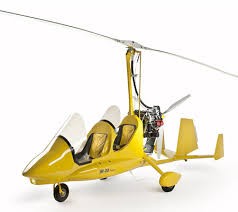
Flying – the joy of flying gyrocopters

Flying – the joy of flying gyrocopters

Flying a Gyrocopter, what a joy

Few aviation experiences are as pure and exhilarating as flying a gyrocopter. Also known as an autogyro, this unique aircraft sits somewhere between a helicopter and a fixed-wing plane, offering pilots a flying experience that feels both liberating and hands-on. Yet, like all forms of aviation, gyrocopter flying comes with its own set of challenges. Understanding both sides is key to appreciating why so many pilots fall in love with these remarkable machines.

Riding a motorcycle in the air

One of the most celebrated aspects of flying a gyrocopter is the sense of openness. Many gyrocopters have open or semi-open cockpits, providing near-panoramic views of the landscape below. Whether you’re flying along coastlines, over rolling countryside, or tracing rivers, the connection to the environment is immediate and immersive. The feeling cannot be described adequately and must be experienced to be understood. The same open cockpit that provides incredible views also exposes pilots to wind, cold, and noise. Flying in cooler climates or at higher altitudes often requires specialized clothing and equipment to remain comfortable.

 Mechanical Elegance

Gyrocopters are mechanically simpler than helicopters. The rotor is not powered in flight; instead, it autorotates as air flows upward through the blades. This simplicity often translates into lower maintenance costs and fewer mechanical complexities, which appeals to pilots who enjoy understanding and working closely with their aircraft.

 Short Take-off and Landing Capability

Gyrocopters can operate from surprisingly short runways and even rough airstrips, making them ideal for recreational flying in remote or rural areas. This versatility opens up destinations that might be inaccessible to traditional fixed-wing aircraft.

 Exceptional Low-Speed Handling

Unlike airplanes, gyrocopters can fly safely at very low airspeeds without the risk of stalling. This makes them excellent platforms for sightseeing, photography, and relaxed local flights where the journey matters more than speed.

Sense of Community

The Gyrocopter pilot’s community is tightly knit and welcoming. Fly-ins, local clubs, and online forums foster a shared passion for learning, safety, and adventure, making the social side of gyrocopter flying especially rewarding.


Weather Sensitivity

Gyrocopters are more affected by wind and turbulence than heavier aircraft. Strong gusts, crosswinds, or thermals can make flights uncomfortable or unsafe, requiring careful weather planning and conservative decision-making.


Limited Speed and Range

While gyrocopters excel at low-and-slow flying, they are not designed for long cross-country trips. Their cruising speed and fuel capacity are modest, which can limit travel efficiency compared to traditional airplanes. I must however note that I flew my Magni 22 from Pretoria to Cape Town and Pretoria to Inhaca island, Mozambique. Careful planning was needed but it can be done.


Training and Skill Requirements

Despite their simplicity, gyrocopters demand proper training. Rotor management, take-off technique, and energy awareness are critical skills that differ from both airplanes and helicopters. Quality instruction is essential, and in some regions, instructors and training facilities can be limited.


Flying a gyrocopter is not about speed, luxury, or convenience—it’s about connection. It’s about feeling the air, reading the landscape, and enjoying aviation in its most visceral form. For pilots who value simplicity, adventure, and a hands-on flying experience, the joys often far outweigh the challenges.


The author owned and piloted a Magni 16 and later a Magni 22

error: Content is protected !!